Total Pageviews

Translate

Tuesday, June 4, 2013

Leadership Soup!


1.  Authentic - be genuine, candid, forthright in all actions and communications...
 
2.  Brave - be able and willing to take to the front in times of danger and indecision...
 
 
3.  Confident - always exerting the ability to overcome, adapt and improvise during crisis at all times...
 
4.  Determined - be a mover and shaker in getting things done regardless of risks in which have been calculated and weighed...
 
 
5.  Empathetic - be able and open to offering compassion & understanding regarding concerns & issues...
6.  Forgiving - being able to extend to those who make mistakes under their charge...
 
 
7.  Grateful - for all the accomplishments and successes earned, and willing to share and give ALL  credit to those on the team and within the organization...
 
 
8.  Honorable - those whom succeed and lead by celebrating everyone's accomplishments and achievements on the team and within the organization...
 
 
9.  Ingenius - be an innovator and forward thinking individual open to ideas and willing to reform and progress...


10.  Jovial - in their character and communications creating a culture of camaraderie, caring and genuine happiness...


11.  Kindheartedness - realizing their is no more powerful demonstration of any leaders ability...


12.  Leader - inspiring and empowering others to put forth and be the best that they can possibly be...
 
 
13.  Motivator - using all your character traits and influence, power of persuasion, to obtain buy in and to see that things get accomplished...


14.  No Nonsense- suggesting although there is a time for play and  rest, one must remain focused to the quality of the process and productivity of which the organizational or team goals are...


 15.  Omnipresent - those who follow you will always and sense you are standing behind them even when not physically there...


16.  Passionate - demonstrates, personifies and reveals the need for others to be appreciated and understood day in and day out to all...


17.  Quality -  as part of your leadership, ensuring and expecting high outcomes, results and performance from both yourself and all within the organization...


18.  Rational - in always making calls and decisions based on data and fact in reference to improving performance and quality...


19.  Systematic - yet human in your approach to activities, conduct and policy by yourself and members of the organization...


 20.  Tactful - in having the presence to conduct affairs, business and communications in which conclude in a productive and positive way...
 
21.  Understanding - having the experience, insight and foresight to reflect as to why and how things occur...


 22.  Virtuous - as a servant to others having the capacity and  the will to do what is always right, based on your morals and principles despite the risks and consequences...


 23.  Wisdom - as a person who leads, doing so with common sense and regard, not for oneself, but for all in whom they serve and represent, with their interests and that of the organization...


 24.  X-raylike - having the acumen to see, examine and analyze beneath the surface both your people and organization in assessing both climate, culture and efficacy...


25.  Yearnful - to constantly research and seek at ways to promote and further progress and positive change within your team and organization...


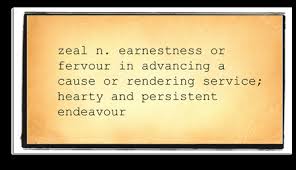
26.  Zeal - when it comes to standing by and promoting what is good for the organization, team and your followers...


Please feel free to comment or add your own descriptive words about leadership in which you feel strongly about.   I hope my PLN and readers enjoyed and can take something away from this?   I look forward to your comments.  Peace!

Thursday, April 11, 2013

Analysis of Climate & Culture in Classrooms!

The inspiration for this post dates back quite awhile now.  I took a moment to research, after being enlightened,  in comparing and contrasting two words.   I found this endeavor to be very eye opening as well as  intriguing.   One of the terms seemed to surface all the time in educational literature, research and professional development.  Likewise, through all my years of experience in education, it was the one used most by colleagues while collaboration and discussions took place regarding best practices and classroom management.  I concurred with them as I had really never given it much thought.   Neither had I taken the much needed time to reflect on the meaning of these words, and how one of them has now become both archaic and obsolete in education jargon today, or has it really? 

One evening last year I decided to take a closer look at the term "rigor" in the dictionary.  Quite frankly and initially, I was both unsettled and unnerved at its definition as provided and its obvious applications to education;  http://dictionary.reference.com/browse/rigor?s=t  To say the least it was in fact both the climate and culture as described by many teachers and administrators of past traditional classrooms of the 20th century, or at least how many thousands of educators surely ran them.  Even today, it remains viable as the term is still widely used and misused by both teachers and administrators.   In retrospect, I also believe despite the definition as given, its not the conscious desire or intent of most high quality and effective teachers to run their classrooms in such a manner.  Perhaps in today's classrooms and schools around the world the terms order, focus, driven, engaged, direction, mutual respect, sense of belonging and normalcy were the only semblances or aspects of rigor that teachers truly wanted or desired?


Now, let's look at the term "vigor; http://dictionary.reference.com/browse/vigor?s=t It does not take a rocket scientist to see the positive and affirming applications and relevance this term has to classrooms.  Vigor clearly implies a climate and culture which is more inviting and nourishing to the human mind and learning.  On the contrary however, It also reveals a structure that probably is not conducive to much order and normalcy to varying degrees I would think.  I believe few teachers would opine to think differently. Surprisingly, in searching for an image to depict or describe vigor, most of the pictures are difficult to distinguish from those in which you can view under the term rigor? 
 
I write this in the hope of providing food for thought only and opening up discussion.  As a long time educator and now administrator, I personally do not have an issue with the use of either word.  I just hope those who read this might find it as interesting as I did, and perhaps can learn from it.  My main concern and focus is, are students happy or content with their teachers?  Are they learning?  Are they engaged?  Are they being successful?  Peace, and yours in the good fight.

Friday, March 22, 2013

Educators Bringing Life To Lesson Plans


At the core of what education and teaching is all about, quality teachers and administrators will undoubtedly reiterate this fundamental premise.  The mark of an effective and efficient teacher, as well as school, will ultimately come down to how and what has been planned on a daily and period  basis by each and every certified teacher on staff. 

Although the dynamics of what goes on in individual classrooms and disciplines is marked by equally important facets such as accurate attendance and classroom and time management, bringing into the classroom a curriculum aligned and essential questions plan should be the ultimate goal of every educator.   This plan or lesson should  ultimately be engaging, inspiring and a motivating piece of art as a result of outstanding creativity, intuitiveness, mastery of subject matter and content, planning and a keen eye and command of technology resources in which are available and out there.  As part of this strategy,  it will hopefully include implementation of Social Media resources which will open the traditional classroom doors to the outside world.

As a former coach for many years it is not my intention here to dictate or mandate the x’s and o’s of what teachers should be doing each and every moment in their classroom.  If my readers were expecting tools and additional resources to guide them to raising efficacy in their instruction and methodology this was only slightly my lesson plan.

Although I have said many times before not everyone can teach, I do think that teachers, if they really want to be great teachers,  can improve and become better at their profession.  What is at the core of this article and in question is the quality and quantity of teacher’s  day to day instruction to reach, impact and see to it that all students under their charge are maximizing their levels of achievement and success.  To this end, the rhetorical question which invariably comes to mind is “but how?”  The answer simply rests within the mind and heart of each and every classroom teacher.
 Bringing life to lesson plans implies first a teacher must be very passionate about teaching.  They see it as a livelihood as well as a profession.  They realize that developing awesome lesson plans take a lot of time.  They go well beyond the traditional classroom planning hours to work at creating these pieces of art from wherever and whenever they might be outside the confines of the their planning hours AND the school.  They are constantly brainstorming and thinking of ways to engage their students.  They are constantly and consciously thinking of ideas in which will provide relevance and connectedness to the other disciplines as well as current events.  This to some might be a calling but to others it is simply a case of doing all within their power to ensure their kids are getting the maximum effort and attention all great teachers should be providing.  This is not about salary and benefits and what the school or administration can do for “me”.  It is about them, our most precious assets to our collective futures.  We as educators are fortunate to have the opportunity and should feel privileged to be able to direct and ensure our kids of today have a simple chance at the jungle in which we refer to as the real world! 
Equally as important, and not to be discounted, there must be unmistakable regard, care and compassion for each and every child assigned to your class.  Although we live in an often regarded non-compassionate and caring society, it is here in the individual classroom where a teacher’s remarks, words, and attitude can have a long lasting and far reaching impact on not only the education but character of each and every one of their students.  We must consciously see and think about this as we go about our period and daily interactions with our students as we teach them right from wrong along with the three R’s. 
Needless to say and in closing, I hope that it has become apparent that in bringing life to lesson plans an educator has to look deeply in the mirror and within them to see and understand the enormous charge and privilege they have accepted.  To this end, prepare yourselves for a journey like no other, in doing a job and living through the hopes and dreams of others instead of ourselves.  This is what we were brought on this earth to do.   Peace!
 

Wednesday, October 31, 2012

Reflecting On Educational Leadership

My son Seth, wife Amal and I at The Monastery atop Petra, Jordan on October 10th 2012
After having completed a short tenure overseas in the Middle East as a Middle School Principal at a private school,  I have a little time on my hands to reflect and  talk about it publicly.

I am sure most of my followers here and on Twitter are probably wondering and perplexed as to why it is over, and I have returned to the US.  Sadly, after over two months of building continuity, trust and deep relationships in such a short time with all of the stakeholders of my division (270 students and 44 staff members), the precariousness and volatility of the political climate which has escalated and continues to be uncertain, led for both a family and personal decision to leave what I had begun.  I would be remiss not to mention the fact there were other factors that led to this decision.  First and foremost amongst them, was the conflict in interests involving compassionate and quality education to children versus the private and entrepreneurial aspects of running a for- profit school.  I honestly did not believe there was such a huge gap between the ownership and the philosophy and intentions of caring, decent and competent staff and faculty.  All of us, in this particular capacity, catering and dealing with a clientele who invests financially on an annual basis as much money as any private school's tuition cost here in America.

Nevertheless, I took with me several unforgettable and invaluable learning pieces, and ultimately tools, as I departed and said farewell.

Number one, life in both a personal and professional capacity is all about quality relationships... 

The underestimation of the importance of communication and listening cannot be undervalued or dismissed...

Children, as I have long known, are fascinating and resilient in their resolve to forget, persevere and move forward despite all the obstacles and uncertainty in which both change and life itself brings upon us all constantly...

As heard before somewhere, managers do things right, yet true leaders do the right thing...

My life, or any life for that matter, is unimportant except for the impact it has on others...

No one has ever achieved or gained any level of success or happiness in life without the help and assistance of many others along their journeys throughout life...

In closing, it was very bittersweet in leaving the manner and way in which I was compelled to do, other than to say there is a reason for everything.  To this end, the reason has yet to be answered or determined.  As a servant leader, and as was confirmed by both my students and staff, with the many kind words and tears that were shed as I departed a couple weeks back,  I did my job well!  I gave hope, faith, confidence, encouragement and empowerment to each and every individual I spoke with and came into contact with.  I feel confident and stronger in the experience I gained on such an international platform and venue.  I move forward, as I know my colleagues will, with renewed confidence and strength, that as long as one is both compassionate and passionate to what he or she  is doing and whom they serve, that there can be no other alternative but continued growth, self satisfaction and success in their futures.

Godspeed to my Faculty, Staff and Most of all My Beautiful Students!   

Friday, June 22, 2012

Ten Tantamount Commandments Of Teaching!

As I continually reflect on my profession and what to write about to have an impact on all my global colleagues, I remind myself of where I spent the first 19 years of my chosen profession, the classroom!  Many years ago I came across a photocopied list in which was called Ten Terrific Teacher Traits.  It was unsigned and unauthored in the state of receipt. 

     I have held on to this golden piece of literature for years and have shared it with my colleagues in the classroom year in and year out over the last six or seven years.  As I have read and reread these highly commendable if not invaluable pieces of advice,  I have humbly attempted to edit them as well as modify them based on my experiences.  Truthfully, the fundamental gist of each line item remains both relevant and steadfast in its applicability to what happens in classrooms all over the world.  I hope all teachers, especially new and blossoming teachers find these as special as I did while consciously trying to implement them into their practices.  With this said, I do know and realize there have been many articles and similarly books written on the topic, yet I found these as very simple, straightforward and enormously important to being an effective and productive classroom teacher, leader and facilitator regardless of the grade levels or demographics in which you are currently in.  I hope you find them equally as resounding as I did, and I welcome additions to the list (in no particular order of importance);
I.  Always be early, especially before your students arrive.  This demonstrates care, eagerness and enthusiasm...
II.  Learn something new and personal about each of your students as soon as possible.  Do this inconspicuously if at all possible.  This again demonstrates genuine sincerity and caring for your students.
III.  Return assignments, quizzes and tests the next day.  This models and demonstrates to your students that these are learning tools of value, and gives students reasonable instant feedback and reinforcement to evaluate and reevaluate their errs and study habits...
IV.  Do not share personal stories (war stories) unless asked to and reaffirmed by all the students in your class.  Students, whether you want to believe it or not, are basically not interested.  You are not the center of their universe regardless of what you might want to believe.  Do not waste valuable educational and instructional time on unrelated diversions...
V.  Constantly evaluate your effectiveness by always being cognizant and monitoring your student's eyes.  This is the most reliable  indicator of you effectiveness.  If they look confused and or bored, they are!...
VI.  Always be positive and supportive in creating, developing, fostering and nurturing a quality comforting and safe learning climate and environment.  Smile often and never use derogatory or inflammatory comments/remarks toward your students.  Never tell a student to "shut up".  Failing to heed this advice will create both a climate and culture of mistrust which invariably will lead to uncaring and unproductive students under your charge...
VII.  Students do not expect you to be all knowing, so stop worrying about it.  Admit to them frankly and openly when you do not know an answer to their questions.  Tell them you will research it and find out.  Their only true expectations of you is to always be presentable, professional, organized and well prepared...
VIII.  Always exercise equity in your classroom.  Be fair and consistent by laying down fundamental ground rules and expectations.  Stay consistent and clearly and explicitly communicate these often to all stakeholders early and often...
IX.  Do not make assumptions or stereotype any of your students.  Do not scold students for not knowing things in which you would think, and perhaps they should, already know.  It serves no purpose whatsoever and is simply counterproductive.  If ONE does not know, it is likely there is another, if not an entire room full that does not know.  Review when and if necessary in succinct and well organized ways when the need arises.
X.  Always use or attempt to use all available resources at your disposal.  In the likely event it does not exist or is unavailable, make sure you have requested this.  Likewise, regarding commmunication, make yourself available as much as practical and reasonable according to your lifestyle, beyond the normal classroom hours to all stakeholders...
I look forward to my colleagues additions...  PEACE!  


Friday, June 8, 2012

Farewell Franklin


     Well, the school year is finally over and I could not think of a more appropriate time to create my next story.  I have had this on my mind for some time now, considering I will be leaving my first and only Assistant Principal's post after four years to embark on my next new adventure.  Naturally, I am both ecstatic and anxious about my new assignment.  One reason for this is that I will be taking on my first Principal ship, and secondly it will be at a post at an international school.  This, too me, is an opportunity of a lifetime for my family and I both personally and professionally.  The opportunity was simply one that could not be passed upon despite my time , commitment and energy invested in such a wonderful community.  I think most people in education would concur.  However, just as important, the intent of this post was to share and reveal both reflections and thoughts about the past four years.

     To put things in perspective, if we as human beings really consider and reflect upon life in and of itself, our time here on earth is shockingly short.  Essentially, it consists of a myriad and potpourri of phases and stories.  Luckily, to this point in my life and career, I firmly believe I can say by far most of my stories have had positive or good endings.  As a person, each and everyone of us brings to the table a story.  As we go through the natural phases of life our stories unfold and grow longer and more complex if we are fortunate enough.

     This particular story is about my experience the past four years in a rural public high school in the rural mountains of western North Carolina.  The name of the school and exact location is not necessarily important to identify, but what is important are all the people whom are stakeholders of the school.  Most importantly, the teachers, the support staff and KIDS!  I have been extremely fortunate to have been associated with this particular school and community. 

     In departing, it is with bittersweet and mixed emotions for what could have been, yet I will go as I came, in the quiet of the night with the knowledge and resolve in that what I have done and my work here made a difference while being compassionate, passionate and equally genuine in all my efforts.
     I cannot adequately express here in a short story the sincere appreciation to all whom have supported me through thick and thin, and have taught me so much about what it is to serve as an administrator at your school.  This school, this town and this community was and is a wonderful place to have been able to call home.

     With this said, of all the experiences and memories that I will take with me, none will remain permanent and steadfast as part of my story  than those in which I was in a position and opportunity to have both an impact! What will be remembered are my students, as well as my teachers, and all the  authentic, caring and quality relationships in which had developed.

     To this end, I say thank you for the memories, and  I bid goodbye to this small, rural school and community. Another chapter of my story is now complete and comes to a close.  Thank you for all that you do for the children.  As always, yours in the fight and GO PANTHERS!

God Bless and Godspeed.     

Sunday, May 20, 2012

Napping In High School?

     I do not know if this is funny or sad.  However, I do know there are over 87 million different images of it going on in schools!  You decide. https://www.google.com/search?tbm=isch&hl=en&source=hp&biw=1204&bih=629&q=sleeping+in+school&gbv=2&oq=sleeping+in+school&aq=f&aqi=g2g-m8&aql=&gs_l=img.3..0l2j0i5l8.1032.4184.0.4514.18.16.0.2.2.0.276.2179.2j12j2.16.0...0.0.b63Q6K0e3xk Here in North Carolina we are in the midst of our end of year state mandated End of Course examinations.  We began Thursday, and conduct one a day for four hour sessions.  We will be finished Tuesday next.  Oh by the way, we throw in an entire extra day of would be instruction for make ups for these as well...  These have been going on for nearly 20 years if my recollection serves me correctly?  Nevertheless, as part of the testing sessions, once students are finished the testing administration directives allow for the students to in effect "do nothing" until the entire testing time/session is over...

     So, this leads to me watching my students getting off the bus with pillows and blankets and some literally wearing their pajamas.  Is it me or is there something just utterly wrong with this?  By no means do I place any blame on the children whatsoever.  If I knew I were going to complete a state mandated test in an hour or two and then was handcuffed and gagged not to do anything the remainder of the class period and testing session, then why not just SLEEEEEEEEEEEP?  On top of this, often times the room temperature is either too warm at the end of 1st semester or too frigid at the end of the school year!

     It never ceases to amaze me how the gurus in our state department of public education can be so clueless and inconsiderate at the valuable waste of time in testing and analyzing student's achievement on state mandated examinations.  Literally, beyond sound common sense we as educators are strapped to feed content and curriculum and then robbed of hours and days just to accommodate for these tests.  In essence really do not provide for one argument or  one conclusive statement about the quality and culture of what are many great and caring and compassionate schools and learning environments that exist throughout the state.  All of this which can be contributed to the inherent ability and nurturing of not only competent and quality educators, but people first who have dedicated their entire careers to often times being the sole mentor of thousands of untold students.

Would leave to hear from others in the tarheel state as well as around the country and what your practices are...

PEACE & GODSPEED.